


We are Commercial
Roofing Experts

Roofing Problem? Call 24Hr Emergency Service
Quick Service Request

Send Inspection Request

photo hero 15
photo 54
About Company

Professional Roofing Contractors

Donec rutrum congue leo eget malesuada. Sed porttitor lectus nibh. Cras ultricies ligula sed magna dictum porta. Vivamus magna justo, lacinia eget consectetur sed, convallis at tellus.
Vestibulum ante ipsum primis in faucibus orci luctus et ultrices posuere cubilia Curae; Donec velit neque, auctor sit amet aliquam vel, ullamcorper sit amet ligula. Quisque velit nisi, pretium ut lacinia in, elementum id enim. Vivamus suscipit tortor eget felis porttitor volutpat. Sed porttitor lectus nibh. Vestibulum ante ipsum primis in faucibus orci luctus et ultrices posuere cubilia Curae.

15+

Years In Business

1.5k

Happy Clients

2.5k

Projects Completed

150+

Trained Staff

Our Services

We Provide Superior Roofing Services

services 1
Roof Installations

Lorem ipsum dolor sit amet, consectetur adipiscing elit. Ut elit tellus, luctus nec ullamcorper mattis, pulvinar dapibus leo.

services 2
Roof Repair

Lorem ipsum dolor sit amet, consectetur adipiscing elit. Ut elit tellus, luctus nec ullamcorper mattis, pulvinar dapibus leo.

service 3
Leak Repair

Lorem ipsum dolor sit amet, consectetur adipiscing elit. Ut elit tellus, luctus nec ullamcorper mattis, pulvinar dapibus leo.

Additional Services

We Also Offer

Cras ultricies ligula sed magna dictum porta. Vestibulum ante ipsum primis in faucibus orci luctus et ultrices posuere cubilia Curae; Donec velit neque, auctor sit amet aliquam vel, ullamcorper sit amet ligula. Pellentesque in ipsum id orci porta dapibus.

services 11
Why Choose Us

Six Reasons For People Choosing Us

Quality Material

Lorem ipsum dolor sit amet, consectetur adipiscing elit.

Accredited

Lorem ipsum dolor sit amet, consectetur adipiscing elit.

Trained Workers

Lorem ipsum dolor sit amet, consectetur adipiscing elit.

Time Availability

Lorem ipsum dolor sit amet, consectetur adipiscing elit.

Quick Response

Lorem ipsum dolor sit amet, consectetur adipiscing elit.

1 Year Warranty

Lorem ipsum dolor sit amet, consectetur adipiscing elit.

We Are Business Who Cares, And it Shows

OVER 540 “5 STARS” REVIEWS AND CLIMBING

yelp
Rate Us on Yelp

248 reviews

logo google
Rate Us on Google

1,248 reviews

People Say The Nicest Things

Lorem ipsum dolor sit amet, consectetur adipiscing elit. Ut elit tellus, luctus nec ullamcorper mattis, pulvinar dapibus leo.

testemonial 2 4
4.5/5
Jeniffer Smith

CHEF

Lorem ipsum dolor sit amet, consectetur adipiscing elit. Ut elit tellus, luctus nec ullamcorper mattis, pulvinar dapibus leo.
testimonial 03 free img 4
4/5
Pamela Duncan

DIRECTOR

Lorem ipsum dolor sit amet, consectetur adipiscing elit. Ut elit tellus, luctus nec ullamcorper mattis, pulvinar dapibus leo.
testimonial 13 free img 4
4.5/5
Steve Tailor

CFO

Lorem ipsum dolor sit amet, consectetur adipiscing elit. Ut elit tellus, luctus nec ullamcorper mattis, pulvinar dapibus leo.
Don't Know What To Start With?

Get A Solutions For All Roofing Services

Offices

Head Office

Cras ultricies ligula sed magna dictum porta. Vestibulum ante ipsum primis in faucibus orci luctus et ultrices posuere cubilia Curae.
24th St. Ave. San Francisco, California
Phone: +1 2345 678
Email: office@example.com
Free Consultation

Get A Free Quote

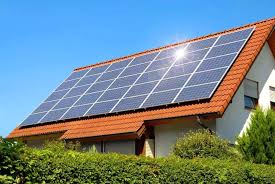
Solar panels can be installed on the top of a house to generate electricity, reducing electricity bills and increasing energy independence. This is a space-efficient and secure option, though the initial cost can be a barrier that is sometimes offset by government subsidies and long-term savings. Rooftop installations typically involve securing the panels to the roof structure with a mounting system.

Solar Panel

.

How it works
  • Photovoltaic (PV) cells: Solar panels are made of individual cells that convert sunlight into electricity.
  • Sunlight to electricity: Photons from the sun strike the cells, knocking electrons loose and creating an electric current.
  • Connection to the grid: This electrical current is captured and can be used to power your home. Excess energy can be sold back to the grid through systems like Net Metering, which helps reduce overall electricity bills. 
 
Benefits of rooftop solar panels
    • Cost savings: Reduces or eliminates monthly electricity bills.
  • Energy independence: Provides a more reliable power source, reducing reliance on the grid.
  • Environmental benefits: Generates clean, renewable energy.
  • Space-efficient: Uses existing roof space, avoiding land use concerns.
  • Aesthetics: Can be a seamless and attractive addition to a home. 
 
Installation process
  • Site assessment: A professional will assess your roof’s structure and potential for sunlight, accounting for factors like shading from trees or other buildings.
  • Mounting system: A racking system is securely attached to the roof’s structure.
  • Panel placement: Solar panels are mounted onto the racking system. Proper placement ensures they capture maximum sunlight.
  • Electrical work: The panels are wired to an inverter and your home’s electrical system. Cables are run through the roof using specialized flashing to prevent water leaks. 
 
Cost and subsidies
  • Initial cost: The upfront cost varies based on the system size, panel quality, and other components like batteries. A 1kW system might start around ₹70,000 in India, while larger systems cost more.
  • Government subsidies: Government programs may provide subsidies to help lower the total cost of the installation. 
 
How to get started
  1. Register: Visit the National Portal for Rooftop Solar to register and find information specific to your location, such as local vendors and subsidy details.
  2. Choose a system: Based on your electricity usage, determine the suitable system size with the help of the portal or a vendor.
  3. Select a vendor: Choose a vendor to install the system.
  4. Installation: The vendor will install the system on your roof
solar, panels, solar energy, apprenticeship, solar, solar, solar, solar, solar

Installation Process Solar Panels

1. Pre-installation and design
  • Site Assessment: 

    Evaluate the location’s suitability by checking factors like available space, sun exposure, and the structural integrity of the roof. 

     
  • System Design: 

    Plan the system, including the number of panels, the inverter size, and any other necessary components, based on energy needs and site assessment. 

     
  • Permitting and Paperwork: 
    Obtain all necessary permits and approvals from local authorities and utility companiesThe solar panel installation process involves several steps, starting with a site assessment and system design, followed by obtaining permits, and then physically installing the mounting structure and solar panels. The final stages include electrical wiring to connect the panels to an inverter, a battery (if applicable), and the electrical grid, before a thorough system test and final inspection


download (16)

The sun provides solar energy in the form of photons, which are converted into electricity by solar panels through the photovoltaic effect. Solar panels, made of materials like silicon, capture sunlight, which excites electrons and creates a direct current (DC). This DC electricity is then converted to alternating current (AC) by an inverter, making it usable for homes and businesses.

How solar panels use sunlight
    • Photovoltaic (PV) cells: Solar panels are made of PV cells, typically from semiconductor materials like silicon.
    • Energy absorption: When photons (light particles) from the sun strike the PV cells, the energy is absorbed.
    • Electron release: This energy knocks electrons loose from the atoms within the silicon.
    • Direct current (DC) creation: The flow of these loose electrons creates an electric current, specifically direct current (DC).
  • Inverter conversion: A device called an inverter converts the DC electricity into alternating current (AC), which is the standard type of electricity used in homes and by most appliances. 


  • How does solar power work? | National Grid

    15 May 2023 — Solar panels are usually made from silicon, or another semiconductor material installed in a metal panel frame with a g…

    National Grid Group
     
    Z
     
  • Solar panel – Wikipedia

    A solar panel is a device that converts sunlight into electricity by using multiple solar modules that consist of photovoltaic (PV…

    Wikipedia
     
    2Q==
     
  • Top 8 Reasons Why Solar Panels are beneficial

    Actually, solar energy is obtained from the sun’s rays. We know that the Sun is a powerful source of energy and it can be properly…

    Punjab Energy Development Agency (PEDA)
     
    9k=
     
Show all

Solar panels have ten common uses: powering homes and appliances, providing lighting for streets and homes, heating water, powering agricultural pumps and dryers, running industrial operations, charging electric vehicles, and powering smaller devices like calculatorsThey are also used for heating and cooling buildings, providing electricity for satellites in space, and are even being integrated into innovations like solar roads.  

 
1. Powering homes and appliances
  • Solar panels generate electricity for all home functions, from lighting to running appliances, and can even store excess power in batteries. 
     
2. Lighting
  • They provide power for streetlights, garden lights, and indoor lighting, often operating off-grid. 
     
3. Heating water
  • Solar water heaters use panels to heat water for domestic use, reducing the need for electricity or gas. 
     
4. Agricultural use
  • Solar-powered pumps can be used for irrigating fields, while solar dryers help preserve crops. 
     
5. Industrial applications
  • Large-scale solar arrays can power manufacturing plants, and solar energy is also used for industrial processes like water treatment and heating. 
     
6. Transportation
  • Solar panels can power electric vehicles through charging stations, and some experimental cars and roads are designed to run on solar energy. 
     

7. Small portable devices 

 
  • They are used to power small, portable electronics such as calculators and chargers. 
     
8. Building heating and cooling
  • Solar panels can be used for active and passive heating systems, and solar-powered attic fans can help cool buildings. 
     
9. Space exploration
  • Satellites in space use solar panels as their primary energy source. 
     
10. Water purification
  • Solar distillation uses solar energy to remove salts from water, providing a source of clean drinking water in areas with limited resources

    Solar panels are used to generate electricity and heat for a wide range of applications, including powering homes, heating water, charging electronic devices, and running various industrial processesThey provide electricity for residential and commercial buildings, power remote locations, and even fuel transportation like electric cars and trains. 

     
    Electricity generation
    • Residential and commercial: Powering homes, businesses, and their appliances. 
       
    • Remote power: Providing electricity to cabins and other off-grid locations without access to power lines. 
       
    • Transportation: Powering electric vehicles such as cars, buses, and race cars. 
       
    • Spacecraft: Supplying power to satellites.


Dive deeper in AI Mode